
Annual Report 2025
Politically, pressure on science and international collaboration increased in 2025. Austerity measures reduced funding for global research partnerships, leading, among other effects, to the suspension of the SPIRIT Programme. Despite these constraints, a new edition of the Leading Houses programme was launched, and the next phase of SOR4D was announced for 2026.
In the context of increasingly complex and intersecting global crises, equitable, effective and impactful research partnerships have become ever more important for developing and implementing sustainable solutions.
In 2025 the KFPE changed its name to Swiss Alliance for Global Research Partnerships.
More than 200 researchers and experts from around the world participated in the revision of the Guide for Global Research Partnerships. The revised Guide for Global Research Partnerships is structured around six guiding principles and offers practical advice on how to engage in equitable, effective and impactful research partnerships.
During the annual conference, the GRP Alliance provided a platform to discuss how AI is reshaping the landscape of research partnerships worldwide.
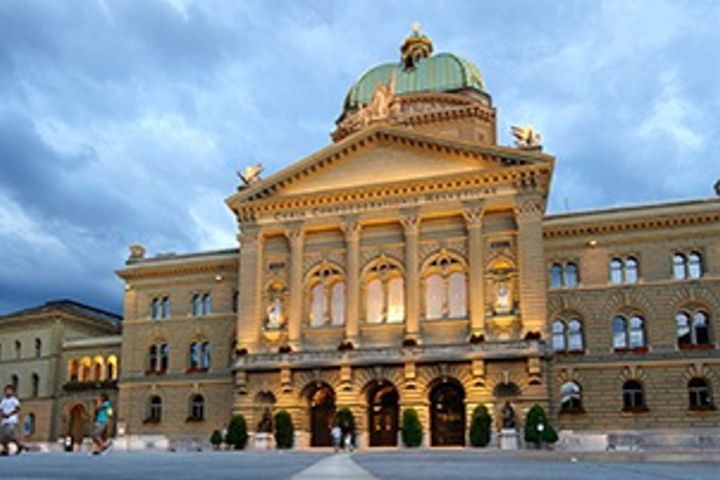
Representatives from member institutions met in Bern to share experiences and best practices on how to navigate global research collaborations in politically complex environments.
1 January:

February: New Publications
25 March:
Interdisciplinary Water Symposium at OST
On March 2025 the GRP-Alliance participated at the Interdisciplinary Water Symposium of OST in Rapperswil. The Symposium brought together participants from the various sectors, representing academia, the public and private sector, water utilities as well as civil society. The GRP-Alliance hosted a workshop on academic partnerships for capacity strengthening to tackle the global challenges associated with water.

22 May:
The GRP-Alliance at the Scientific Days on Appropriate Technologies: Highlighting Governance and Structures in Global Research Partnerships, HES-SO Fribourg
The event brought together researchers, development practitioners, and institutional partners to explore how scientific knowledge and applied technologies can contribute to sustainable development in complex international contexts.
The GRP-Alliance was represented in the roundtable 'Bâtir des partenariats gagnants : Gouvernance et structuration' (Building Successful Partnerships: Governance and Structures), a session that addressed how to design balanced and effective research collaborations. Discussions addressed issues such as power asymmetries, funding structures, mobility, and the roles of non-academic actors.
The session was moderated by Prof. Dr. Maurizio Caon (Haute École de Gestion Fribourg) and brought together a diverse group of panelists:
– Prof. Dr. Zeineb Kassouk (Institut National Agronomique de Tunisie)
– Dr. David Svarin (Swiss National Science Foundation)
– Dr. Théogène-Octave Gakuba (Haute École de Travail Social de Genève)
– Prof. Dr. Michal Dabros (Haute École d'Ingénierie et d'Architecture de Fribourg)
– Cécile Hétault (Fribourg-Solidaire)
– Dr. Elisabeth Schubiger (GRP-Alliance – Swiss Alliance for Global Research Partnerships)
23 May:

Students of the SwissTPH Lecture on "Fundamentals of international research partnership" visited the Swiss Acadmeies of Arts and Sciences to discuss equity and decolonialidty in health research. The presentation of Dr. Henry Yéré provided a unique perspective on the KFPE-Guide from a reading against the Grain.
20 June:

Annual Conference 2025
AI in Global Research Partnerships
New Name: Swiss Alliance for Global Research Partnerships
Swiss Alliance for Global Research Partnerships (GRP-Alliance) is the new name of the former Swiss Commission for Research Partnerships with Developing Countries (KFPE). The new name was officially launched at the alliance’s annual conference on 20 June 2025.
2 July: New Publication
27 August: New Publication

4 September:
Discussion of the Guide for Global Research Partnerships with the Swiss UNESCO Chairs
During the annual meeting of the Swiss UNESCO Chairs, hosted by the Swiss UNESCO Commission, we discussed with twenty representatives from the Swiss UNESCO Chairs, the Swiss UNESCO Commission and SERI how guidelines could strengthen equitable global collaborations in research and teaching, and how the revised Guide for Global Research Partnerships could best contribute to such collaborations.
9 September:
Co-host of the workshop What is "parachute science" & how can I avoid it?" at UniL
During the workshop organised by the Commission 'Égalité - Diversité - Inclusion' of the 'Faculté des Géosciences et de l'Environnement', we discussed with 30 participants how to strengthen equitable research collaborations with partners and practitioners in Valais, Greenland and Gabon. Inspiring testimonials showcased how different researchers at UNIL strive for more inclusive, equitable and impactful research collaborations. More about the event.
12 September:
05 November:
Workshop: Conducting Global Research Partnerships in a Polarised and Politicised World
Event for GRP Alliance member institutions, Hotel Kreuz, Bern
During the the GRP Alliance event representatives from member institutions met in Bern to exchange experiences on how to navigate global collaborations in politically complex environments. Following expert inputs by Laurent Goetschel (swisspeace, University of Basel) and Stephanie Glaeser (University of Lausanne), participants engaged in a workshop to discuss challenges and best practices for working in research partnerships in an ethically sound way. The discussions revealed that the challenges are diverse, ranging from ensuring partner safety and data protection to maintaining institutional integrity in strained geopolitical contexts.

10 November:
The revised Guide for Global Research Partnerships is now available
Developed participatively with over 200 contributors worldwide, the revised Guide reflects today’s realities of global research to support you in fostering effective, equitable and impactful collaborations.
- The 6 principles for Global Research Partnerships point at the main pillars of global collaboration.
- Background information on each principle supports researchers, funders and practitioners in strengthening Global Research in practice.
5 December:
Africa-Bern Research Partnership Day
During the Africa-Bern Research Partnership Day, more than 45 researchers and university staff from the University of Bern came together to exchange on how to strengthen equitable and effective research partnerships.
9 December:
WSL workshop: Strengthening Global Research Networks
At the Swiss Federal Institute for Forest, Snow and Landscape Research WSL workshop on Strengthening Global Research Networks, we explored how to strengthen research partnerships, increase their impact, and secure funding. An inspiring example by Marco Pütz on Forest Restoration and Climate Change in Armenia illustrated how WSL research can align with development cooperation: advancing cutting-edge knowledge while strengthening the impact of Swiss Agency for Development and Cooperation initiatives.